


The German Shepherd Lifetime Guide · 170 pages · Read a sample

The German Shepherd Lifetime Guide

Your German Shepherd’s whole life, every age covered.

From choosing a dog to caring for an older companion, this 170-page illustrated guide helps you plan life with your German Shepherd. It covers the first weeks at home, practising skills amid distractions and finding activities you both enjoy.

Coming Soon
$29USD
Get the German Shepherd guide

30-day money-back guarantee — no questions asked.

Illustrated guide + 11 printable tools · Free lifetime updates

Explore four real pages
The German Shepherd Lifetime Guide cover, with a black-and-tan German Shepherd sitting on a flower-lined path beneath a bright sky
170illustrated pages
10chapters for life together
11printable companion tools
2paper sizes: A4 + Letter

For an ordinary day with your dog

Someone at the door. A new game after the walk.

A visitor arrives before you are ready. On a busy pavement, a familiar cue gets lost. Your dog carries off the box meant for a search game. The book gives you steps for moments like these that you can adapt at home.

Before a German Shepherd comes home, work out who will handle care and learn how to read a prospective parent’s health records. Later, you can turn to recall practice, grooming routines, choosing a class or explaining a change in your dog at the veterinary clinic.

Prepare your homePractise useful skillsShare care confidently
Find the chapter you need
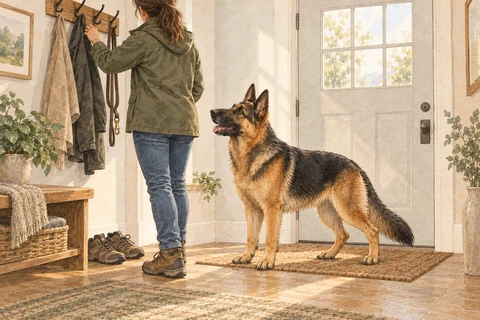
A German Shepherd waits by the front door while its owner reaches for a coat and lead
Chapter 1 begins with the life you can offer and the individual dog you are considering.

Your starting point is here

Open it at today’s age. Return when life changes.

Start with the question you have today. The chapters move from first preparations and puppy learning through adult routines and later-life care, so you can return to the same handbook as your dog grows older.

A German Shepherd puppy watches a mop and bucket from beside its owner
First weeks · 8–16 weeks · 4–9 months

Help a puppy settle and learn.

Chapters 2–4 cover collection day, manageable early experiences, toilet routines and voluntary handling. They also show you how to build recall and lead skills in places where practice can go well.


A young German Shepherd pauses on a lead beside its owner as someone opens a nearby gate
6–24 months

Make hard moments easier.

When familiar skills become difficult, Chapter 5 looks at how to adjust distance, surroundings and expectations. It also covers visitors, other dogs, chasing and decisions about more freedom.

An adult German Shepherd and its owner look toward each other on a relaxed country walk
2–4 years · 3–8 years

Enjoy the routine you share.

Chapter 6 covers home searches, classes and new activities. Chapter 7 shows how to fit food, coat care, movement, travel and care handovers into the week you already have.

An older German Shepherd sniffs beside a path while its owner waits with a loose lead
8–10 years · 10 years onward

Keep familiar comforts close.

Chapters 9–10 cover changes to notice, ways to adapt the house and what to bring to veterinary conversations. They also help you gather observations and preferences when comfort and quality of life need more attention.

Ages are chapter signposts, not deadlines for an individual dog. Keep Chapter 8, the health and emergency reference, bookmarked at every age. For an adult newly joining your home, begin with Chapter 2 as well.

Inside the 170-page guide

Ten chapters, from the first decision onward.

Read the book in order, or turn straight to the chapter that fits your German Shepherd now.

With a new puppy, start with Chapters 2–4. Chapter 5 covers adolescence, including walks that have become difficult. Chapters 6–7 take you through adult activities and daily care; Chapters 9–10 cover later life.

Open the sample pages
  1. 01Is a German Shepherd Right for Your Life?Before choosing your dog

    Think through household fit and dependable care, then look closely at the placement and parent health records.

  2. 02Bringing Your German Shepherd HomeThe first weeks

    Set up rooms and equipment, plan collection day and agree on a first-week routine everyone can follow.

  3. 03Exploring the World Together8–16 weeks

    Plan early experiences your puppy can leave if needed, discuss vaccination precautions and settle into home routines.

  4. 04Skills for a Growing Puppy4–9 months

    Use clear rewards to teach recall and lead skills, while planning feeding, play and handling as your puppy grows.

  5. 05When Familiar Skills Get Harder6–24 months

    Find an easier version of a difficult task while you manage greetings, chasing, freedom and changing care needs.

  6. 06Finding Activities You Both Enjoy2–4 years

    Weigh up classes and activities, try a home search and allow time for gradual progress and rest.

  7. 07Everyday Care Through the Adult Years3–8 years

    Keep feeding, grooming, preventive care and outings workable through weather, travel and a change of carer.

  8. 08Health Concerns and EmergenciesEvery age

    Find veterinary-contact guidance for urgent signs, understand health records and prepare access to help.

  9. 09Adjusting to an Older Dog’s Needs8–10 years

    Notice changes against your dog’s usual day, adapt the home and take useful observations to senior visits.

  10. 10Comfort, Decisions and Goodbye10 years and onward

    Talk through comfort care and difficult decisions, and arrange practical support before and after goodbye.

Four pages, four ways to use the book

A small game. A clear next step. A useful care conversation.

The sample pages show an illustrated puppy example, an adolescent response checklist, an adult search game and guidance for recording an older dog’s quality of life. Select any page to read it at full size.

Follow the guidance to its source

The reference is there when you want to look closer.

Factual statements carry source tags throughout the guide. Appendix A names the organization and reference, with a full link so you can look up the source behind the passage you are reading.

That trail can help you take a specific question to your veterinarian or trainer. The health chapter also explains why a breeding-test record and an assessment of your own dog’s current condition answer different questions.

AVSABAAHAOFAPDSAGerman Shepherd Dog Club of America

An example you can check

From puppy practice to AVSAB.

  • Page 39: the recommendation to use reward-based training carries the source tag [GERS-F-056].
  • Page 154: Appendix A resolves that tag to the American Veterinary Society of Animal Behavior’s 2025 Board Statement on humane dog training, with the full link.

The page 40 sample also shows source tags alongside a breed-specific observation and practical example.

Eleven tools to make your own

Put the plan on paper. Keep the details together.

Each tool comes as a separate PDF in both A4 and US Letter. Print what you need for a homecoming, a training session or a care conversation, then add your own dates and observations.

Prepare, practise and keep track.

  • The German Shepherd Shopping Checklist — check equipment for fit and see what you already have before sourcing the rest.
  • German Shepherd Puppy-Proofing Checklist — check reachable hazards and jobs still to do around the home.
  • German Shepherd Puppy Vaccination Schedule — keep vaccine references with the dates and decisions agreed with your veterinarian.
  • German Shepherd Socialization Checklist (by 14 Weeks) — choose suitable experiences and note comfortable attempts at your puppy’s pace.
  • Your German Shepherd’s First 8 Weeks, Week by Week — plan experiences and household skills, and add actual appointments from 8–16 weeks.
  • German Shepherd Training Session Logs — record the cue, setting and response so you can compare attempts or share them with another carer.

Keep care ready for the next stage.

  • German Shepherd Growth and Body-Condition Tracker — date your weight and body-shape observations for discussion with your veterinarian.
  • German Shepherd Lifetime Care Planning Worksheet — set out the people, services and care arrangements your household can provide.
  • German Shepherd Emergency Contact Card — keep clinic numbers, destinations and transport help in one place.
  • German Shepherd Quality-of-Life Scale (HHHHHMM) — record individual scores and dated observations to discuss with your veterinarian.
  • German Shepherd End-of-Life Planning Worksheet — write down agreed care, household preferences and practical contacts.

The pack contains 22 PDFs: eleven tools in each paper size, with 16 printable pages per size.

The complete German Shepherd edition

A handbook to return to. Tools to use along the way.

  • 170 illustrated pages with examples drawn from life with a German Shepherd.
  • Ten chapters and two appendices organized so you can find the age, task or reference you need.
  • All eleven printable tools, supplied in A4 and US Letter.
  • A source trail through the book, so you can follow a tag beside a statement to the named reference.
  • Free lifetime updates, with future editions included in your purchase.
Coming Soon

The guide and companion pack — $29.

One payment includes the guide PDF and a ZIP containing all 11 printable tools in both paper sizes.


Get the German Shepherd guide

30-day money-back guarantee — no questions asked.

Secure checkout. Your download page opens when checkout is complete.

Time to see how it fits.

Your purchase comes with a 30-day money-back guarantee — no questions asked. Contact us within 30 days if the guide does not suit you, and we will refund your purchase.

A few practical details

Before you bring the guide home.

The samples and chapter list show what you can expect. If you have another question, get in touch.

Send your question
Is it useful if my German Shepherd is already grown?

Yes. Chapters 6 and 7 cover activities and everyday adult care. Chapters 9 and 10 cover older dogs, and Chapter 8 is the health reference throughout life. If an adult is new to your household, Chapter 2 has arrival advice too.

What does it cover about training?

Chapter 4 covers rewards, recall, lead skills, settling and voluntary handling. Chapter 5 looks at what to change when familiar skills become difficult around distractions. The examples help you plan practice, and the Training Session Log lets you compare observations.

What files are included?

You receive a 170-page guide PDF plus a ZIP containing eleven printable tools in two paper sizes. That is 22 printable PDFs, with 16 printable pages in each complete A4 or US Letter set.

Are the previews actual pages from this edition?

They are pages 40, 81, 90 and 139 of the finished German Shepherd guide. Open them to read the same illustrations, examples and source tags included in the book.

How can I read and print it?

Open the guide in a PDF reader on a phone, tablet or computer, and zoom in whenever you need to. For the companion tools, choose the A4 or US Letter version to match your paper.

How will the download arrive?

You get immediate access to your files after purchase, along with an emailed download link. Free lifetime updates include future editions of the guide.

What if it is not the right guide for me?

We offer a 30-day money-back guarantee — no questions asked. Request a refund through the contact form within 30 days of purchase.

A German Shepherd rests on a bed beside its owner during a quiet evening

For the days you spend together

Begin with what you need today. Keep it for what comes next.

You might turn to it for an easier greeting, a game you both enjoy or a better question at the next appointment. Start there, and return to the handbook through the years you share.

Get the German Shepherd guide

30-day money-back guarantee — no questions asked.

$29 USD170 pages · 11 printables

See what’s included